EPISODE

Michael Rich – Can Technology Stop Criminals?

KZSU Shows Logo   HEARSAY CULTURE RADIO
Episode 191
August 14, 2013
55:00
The Future of Bitcoin

Hosted by Dave Levine

ABOUT THIS EPISODE

Surveillance, predictive policing, and society

What if the government used computer software to analyze your potential criminal profile—before you committed any crime? Odd as it seems, what if the profiling was biased, or just plain wrong? How far can governments go to prevent crime with technology?

The late law professor Michael Rich was on the leading edge of these issues in 2013. From the systems that measure blood alcohol levels before drivers start their engines, to drone surveillance, Dave and Rich discussed the role of technology in crime prevention. The article discussed in this interview has been called one of the single most important works in the predictive policing scholarly world.

“If there is a crime that the government should make impossible, it is probably a crime like drunk driving [because] . . . it is not in itself an intentional crime. People don’t go out with the goal of getting drunk and driving. Instead, it is a risky activity that people engage in because they have gotten themselves in the position to do so.” – Michael Rich

“A crime is born in the gap between the morality of society and that of the individual.” – Håkan Nesser, a crime fiction novelist

Can Technology Stop Criminals?
Hearsay Culture Radio
Michael Rich - Can Technology Stop Criminals?
Loading
/
Edward Lee Bonus Conent

extra bonus in blue and orange ribbon

Extended Video Interviews

See premium videos for special episodes in this program, exclusively for members. To access premium video content sign-up here.

ABOUT THE GUEST

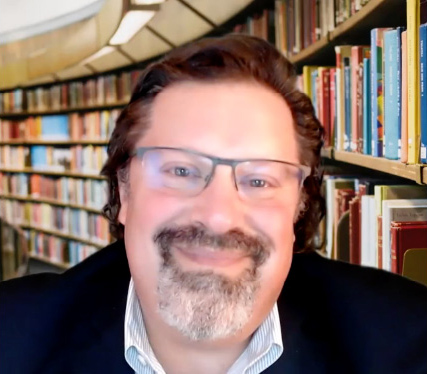
Michael Rich

Elon University School of Law
Michael Rich passed away in 2016 from metastatic kidney cancer. Rich was a professor at Elon University School of Law, whose foundational work in policing and algorithmic computing will inform future scholarship and policy for many years to come.
Dave Golumbia - Guest
Dave Levine

HOST BIO

DAVID LEVINE

Dave Levine is the founder and host of Hearsay Culture. He is a Professor at Elon University School of Law and an Affiliate Scholar at the Center for Internet and Society (Stanford Law School). From 2014-2017, he was a Visiting Research Collaborator at Princeton University’s Center for Information Technology Policy. He is also the co-author of Information Law, Governance, and Cybersecurity (West 2019). A regular contributor to Slate, Dave has been published in leading newspapers, websites, and academic journals in the US and EU.

LISTEN ON YOUR FAVORITE APP

Apple Podcasts       Spotify       Stitcher      TuneIn        Google Podcasts        Pocketcasts

LISTEN TO MORE HEARSAY CULTURE

KZSU Shows
Hearsay Culture Network
Can Humans Stay Human in the Age of AI? Lee Rainie on Resilience, Trust, and the Future
Loading
/
  • Can Humans Stay Human in the Age of AI? Lee Rainie on Resilience, Trust, and the Future

    Can Humans Stay Human in the Age of AI? Lee Rainie on Resilience, Trust, and the Future

    Jun 24, 2026 • 00:56:57

    In this episode of Hearsay Culture, Dave Levine speaks with Lee Rainie about the new Imagining the Digital Future report, Building a Human Resilience Infrastructure for the AI Age, which […]

  • Tribe, Truth, and Technology: Barbara McQuade on the Disinformation Crisis

    Tribe, Truth, and Technology: Barbara McQuade on the Disinformation Crisis

    Jun 19, 2026 • 00:58:57

    In this episode of Hearsay Culture, Dave Levine speaks with Barbara McQuade about her book Attack from Within, exploring how deliberate falsehoods spread through politics, media, and technology to manipulate […]

  • Defending Democracy: Ty Cobb on Law, Power, and Truth

    Defending Democracy: Ty Cobb on Law, Power, and Truth

    Nov 6, 2025 • 00:59:08

    On KZSU Stanford’s Hearsay Culture, Dave Levine hosts Ty Cobb—former Trump Russia investigation attorney and one of the world’s leading white-collar/government investigations lawyers—for an urgent conversation about the core challenge […]

  • When Nuance Vanishes: Searching for Truth in War

    When Nuance Vanishes: Searching for Truth in War

    Sep 23, 2025 • 00:59:37

    Duke professor David Schanzer joined Hearsay Culture on August 21, 2025, to unpack his searing essay from his Perilous Times Substack, “Israel’s Gaza War Has Made Me a Shame to […]

  • Washington’s Broken—Your Hometown Isn’t Helpless

    Washington’s Broken—Your Hometown Isn’t Helpless

    Aug 1, 2025 • 00:58:55

    In this powerful episode, longtime Hearsay Culture guest Lorelei Kelly returns to share her groundbreaking new project, Defend the Constitution, which empowers citizens to hold their own congressional-style field hearings. […]

  • The Fandom Machine: When Obsession Turns Ugly

    The Fandom Machine: When Obsession Turns Ugly

    Jul 25, 2025 • 00:59:37

    Dave Levine’s latest Hearsay Culture episode dives deep into the dark side of fan culture with Professor Mel Stanfill, author of 2024’s Fandom Is Ugly: Networked Harassment and Participatory Culture. […]

  • You’re the Product—Unless We Change the Internet

    You’re the Product—Unless We Change the Internet

    Jul 24, 2025 • 00:59:25

    What if the internet actually worked for us—not just watched us? On this episode of Hearsay Culture, author and former Google exec Richard Whitt joins to explore how we got […]

  • Friction, Consent, and the Illusion of Choice

    Friction, Consent, and the Illusion of Choice

    Jul 18, 2025 • 00:59:50

    When infrastructure fails — planes crash, systems freeze, rights vanish — suddenly everyone cares. Villanova’s Brett Frischmann rejoins Hearsay Culture to explain how tech design, digital contracts, and AI are […]

  • Examining Access: Bridging Gaps in Medicine for All

    Examining Access: Bridging Gaps in Medicine for All

    Jan 22, 2025 • 00:51:18

  • Can Human Skills Survive Technological Advancement?

    Can Human Skills Survive Technological Advancement?

    Jan 16, 2025 • 00:59:36

    In today’s world, generative AI is shaking up the job market, and many fear that their skills are on the chopping block. But Matt Beane’s book The Skill Code: How […]

Pin It on Pinterest

Share This